
African Wall Baskets & Decorative Baskets
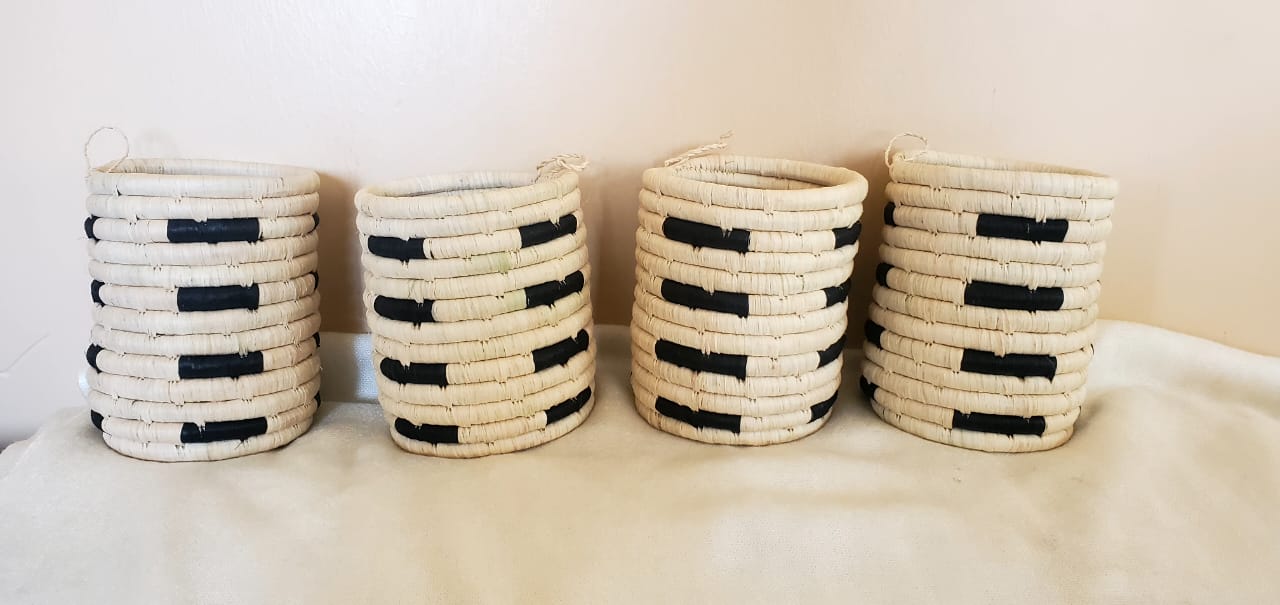
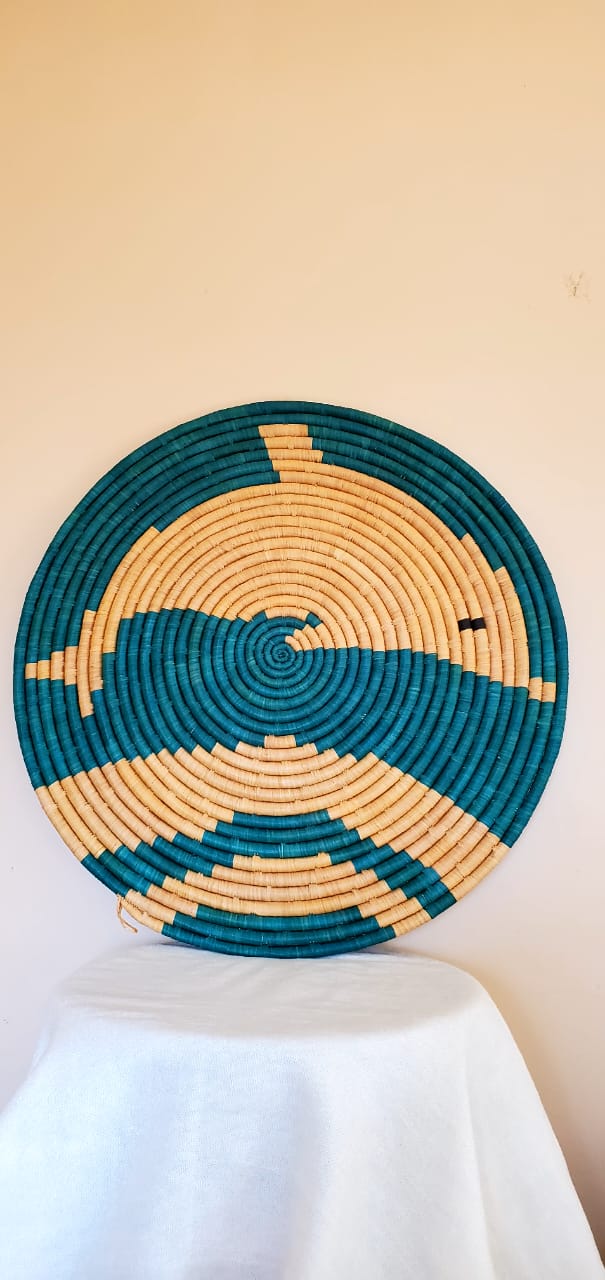
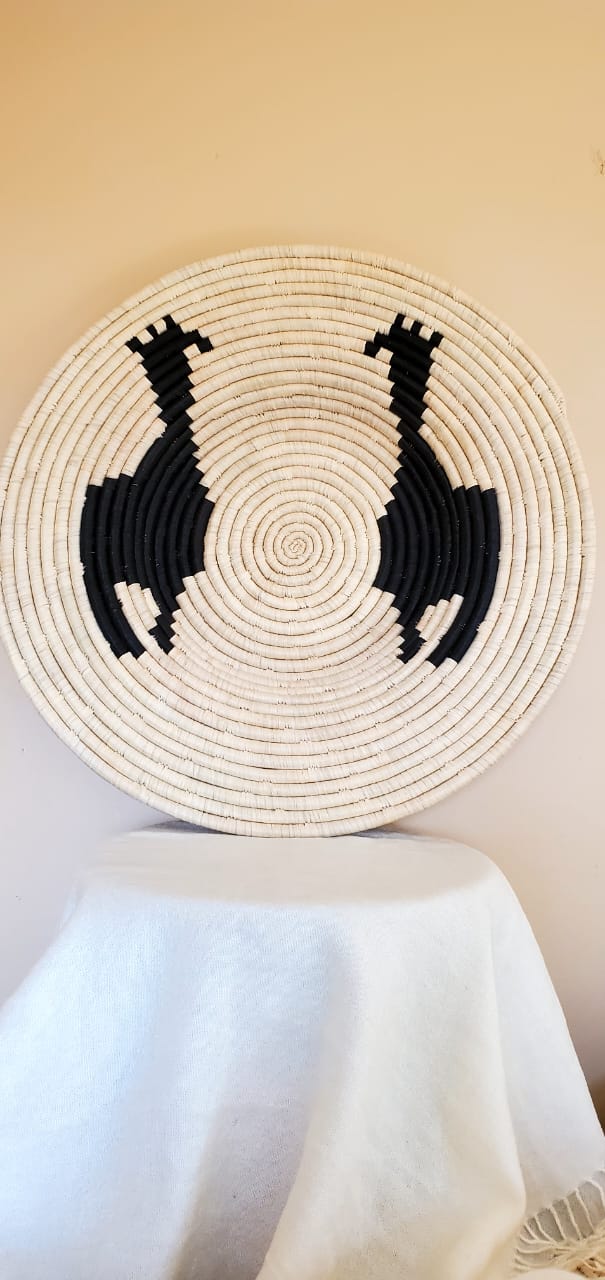
A basket on a wall does something a picture frame can’t. It holds light and shadow, it has depth, and because it’s woven by hand it carries a slight irregularity that reads as warmth rather than error. Our collection brings together African wall baskets for hanging and decorative baskets for shelves, floors and tabletops — all handwoven by artisan weavers, all made from natural plant fibre, none of them pressed into shape in a factory.
Prices start at £8 for a small hexagon basket and £35 for a wall piece. Everything ships across the UK.
How to Hang African Baskets on a Wall
This is the question most people have and almost nobody answers properly, so here is the full method.
Check what’s on the back first. Some woven wall pieces arrive with a loop or a woven hook already stitched in.
If there’s a loop: a single picture hook or a screw with a 10mm protruding head is enough. Woven baskets are light — a large disc typically weighs under a kilogram — so you don’t need heavy-duty fixings on a solid wall. On plasterboard, use a self-drive plasterboard fixing rather than a bare screw.
If there’s no loop: the cleanest solution is a small adhesive-backed sawtooth hanger fixed to the rim on the reverse, or a length of picture wire threaded through the weave near the top edge and twisted back on itself. Thread it through the weave rather than piercing the fibre — natural fibre splits if you punch a hole through it.
For flat plates and discs, two fixings spaced a few centimetres apart sit the piece flatter against the wall than one central hook, which lets the piece tip forward.
Spacing. As a rule, leave a gap of roughly one-third to one-half of the smallest basket’s diameter between pieces. Tighter than that and the arrangement reads as clutter; wider and it stops reading as a group.
Height. Centre the arrangement at eye level — around 145–150cm from the floor to the middle of the group. Above a sofa or a bed, drop it so the lowest piece sits about 20–25cm above the furniture.
Test the layout on the floor first. Lay the pieces out on the floor below the wall and move them around until the balance is right, then transfer the arrangement up. It takes ten minutes and saves you a wall full of holes.
A note on damp. Don’t hang natural-fibre wall pieces directly above a radiator, or in a bathroom that steams up heavily without ventilation. Heat dries the fibre out and repeated damp will soften it.
Arranging a Basket Wall
Basket wall decor works on one principle: vary the size, keep the tone family tight. Three or five pieces read better than four or six, because odd numbers avoid the symmetry that makes an arrangement feel like a shop display.
The classic cluster. One large piece as the anchor, two medium, two small, arranged so the small pieces fall on opposite diagonals from the anchor. This is the arrangement you’ll see in almost every interiors photograph of a basket wall, and it works because the eye enters at the largest piece and travels outward.
The vertical column. Three pieces of descending size stacked in a narrow vertical run. Good for the awkward wall beside a doorway or at the turn of a staircase, where a wide arrangement won’t fit.
The single statement. One large woven disc, centred, with nothing around it. Underrated. A 55cm woven plate above a console table does more work than five small pieces fighting each other.
Mixing with frames. Woven pieces and framed prints sit together well as long as you let the baskets sit slightly apart from the frames rather than interleaving them one-for-one. Texture next to texture, flat next to flat.
Colour. If your wall is a strong colour, natural undyed fibre gives you contrast without competing. If your wall is white or off-white, this is where a dyed piece earns its place.
Decorative Baskets for Shelves, Floors and Tables
Not everything in this collection is for the wall. Decorative baskets do quiet work around a room — they hold things, and they make the surface they sit on look considered rather than cluttered.
On open shelving. A row of matching baskets turns a messy shelf into a deliberate one. Our hexagon baskets are half-height, which means they sit under a standard shelf gap without looking crammed.
Lidded baskets hide what you don’t want on display. The Hifadhi range comes with fitted lids, which makes them useful for the things that have no natural home — chargers, spare keys, remote controls.
As a centrepiece. A shallow woven bowl on a dining table, empty, is a legitimate decorative object. It doesn’t need to hold fruit.
Small baskets for decoration are the ones people struggle to use. What to put in them: coiled cables, tealights, matchboxes, seed packets, hair ties, cufflinks, loose change, plant cuttings in water, dried flowers, coasters, folded napkins. The rule is one category of thing per basket — the moment a basket holds three unrelated things it stops looking decorative and starts looking like a junk drawer.
In a living room, the most useful placement is low: beside the sofa on the floor for throws, or on the lower shelf of a coffee table for magazines and remotes. High shelves want the small decorative pieces; floor level wants the large functional ones.
What African Baskets Are Made Of
There is no single answer, because our “African basket” covers dozens of weaving traditions using whatever fibre grows locally. The fibre determines the character of the finished piece more than the pattern does.
Raffia comes from the raffia palm, Raphia farinifera. The fibre is the thin upper skin of young leaves, peeled off, split into ribbons roughly 12–18mm wide, and sun-dried until it turns from green to a warm sand colour. It’s pliable when woven and firm once dry, which is why raffia pieces hold their shape rather than sagging. It also takes dye deeply rather than sitting on the surface. Our wall discs and wall plates are raffia.
Milulu reed is a marsh rush harvested in Tanzania. It’s coarser and stronger than raffia, with more structural rigidity — better suited to pieces that carry weight. Our laundry hampers use Milulu.
Sisal comes from the agave plant, not a palm at all. It’s the strongest of the three and the most tightly spinnable, which is why sisal pieces can be woven into very fine, dense coils.
Elephant grass, palm leaf and sweetgrass appear across other traditions — Bolga baskets from Ghana use elephant grass, Rwandan agaseke use sweetgrass and sisal.
What all of them share: they are annually renewable plant material, harvested without felling anything, and fully biodegradable at end of life. There is no plastic core, no metal frame and no synthetic binder in any piece we sell.
On dye. Colour in our range comes from natural extracts taken from roots, bark and leaves rather than synthetic coating. Natural dye ages — it softens and lightens gently with daylight over years. That’s the material behaving normally, not a fault.
Caring for Handwoven Baskets
Dust with a dry cloth or a soft brush. That handles almost everything.
For a mark, use a barely damp cloth and let the piece air-dry completely before rehanging.
Never soak, machine wash or scrub the weave. Natural fibre doesn’t tolerate immersion, and scrubbing lifts and frays the fibres.
Keep pieces away from radiators and direct heat, which dries the fibre and makes it brittle.
If a basket loses its shape, reshape it by hand while it’s very slightly damp and let it dry in position.
Natural fibre lightens gradually with daylight. Rotate freestanding pieces occasionally if you want the tone to stay even.
Handwoven, Fairly Paid, Genuinely Made by Hand
Every piece here is woven by hand by African artisans who are paid directly and fairly for their work. There is no factory anywhere in the process.
This matters commercially as well as ethically. Hand-weaving means no two pieces are identical — the tension, the tone and the pattern shift slightly from one to the next. What you receive will be close to the photograph rather than a duplicate of it. If you want ten identical objects, buy machine-made. If you want an object with a maker, this is the trade.
Wholesale
We supply shops, interior stylists and market stalls at wholesale rates with flexible order quantities. Get in touch to discuss numbers.
Frequently Asked Questions
How do you hang an African basket on a wall? If the piece has a woven loop on the back, a single picture hook or a screw with a protruding head is enough — woven baskets are light. If there’s no loop, thread picture wire through the weave near the top edge, or fix a small adhesive sawtooth hanger to the reverse of the rim. For flat discs and plates, two fixings spaced a few centimetres apart hold the piece flatter than one central hook. On plasterboard, use a proper plasterboard fixing.
How many baskets should I hang together? Odd numbers work best — three or five. Use one large piece as the anchor, then arrange smaller pieces around it, leaving a gap of roughly a third to a half of the smallest basket’s width between pieces. Lay the arrangement out on the floor first before you drill anything.
What height should a basket wall be hung at? Centre the arrangement at eye level, around 145–150cm from the floor to the middle of the group. Above furniture, drop it so the lowest piece sits 20–25cm above the sofa or headboard.
What are African baskets made of? It depends on the tradition. Raffia comes from the raffia palm and is light, pliable and takes dye deeply. Milulu is a Tanzanian marsh reed, coarser and stronger. Sisal comes from the agave plant and is the strongest of the three. Others use elephant grass or sweetgrass. All are renewable plant fibres, harvested without felling, and fully biodegradable.
Are woven wall baskets heavy? No. A large woven disc typically weighs under a kilogram, which is why standard picture-hanging fixings are sufficient on a solid wall.
Can I use decorative baskets in a bathroom? Yes, for dry storage and away from direct splash. Avoid hanging natural fibre in a bathroom that steams heavily without ventilation, as repeated damp softens the weave.
What do you put in small decorative baskets? One category of thing per basket — cables, tealights, keys, coasters, hair ties, seed packets. The moment a basket holds three unrelated things it stops reading as decorative.
How do you clean a woven basket? Dust with a dry cloth or soft brush. For marks, use a barely damp cloth and let it air-dry fully. Never soak, machine wash or scrub the weave.
Do you offer wholesale? Yes. We supply shops, stalls and interior stylists at wholesale rates with flexible quantities. Contact us to discuss.
Ready to Start Your Basket Wall?
Choose your pieces below. Everything ships across the UK, and if you’re not sure which sizes work together, message us — we’ll help you plan the arrangement before you buy.