
Handwoven Kilim Rugs
Every kilim rug in this collection was woven by hand, one row at a time, and no two are the same. Shop wool kilim rugs online in the UK, from narrow hallway runners to large rugs that hold a whole living room together. Each kilim is flat-woven with no pile, so it lies thin, feels light underfoot and can be turned over to spread the wear. Every rug is listed with its exact size in centimetres, so you know what will fit before you order.
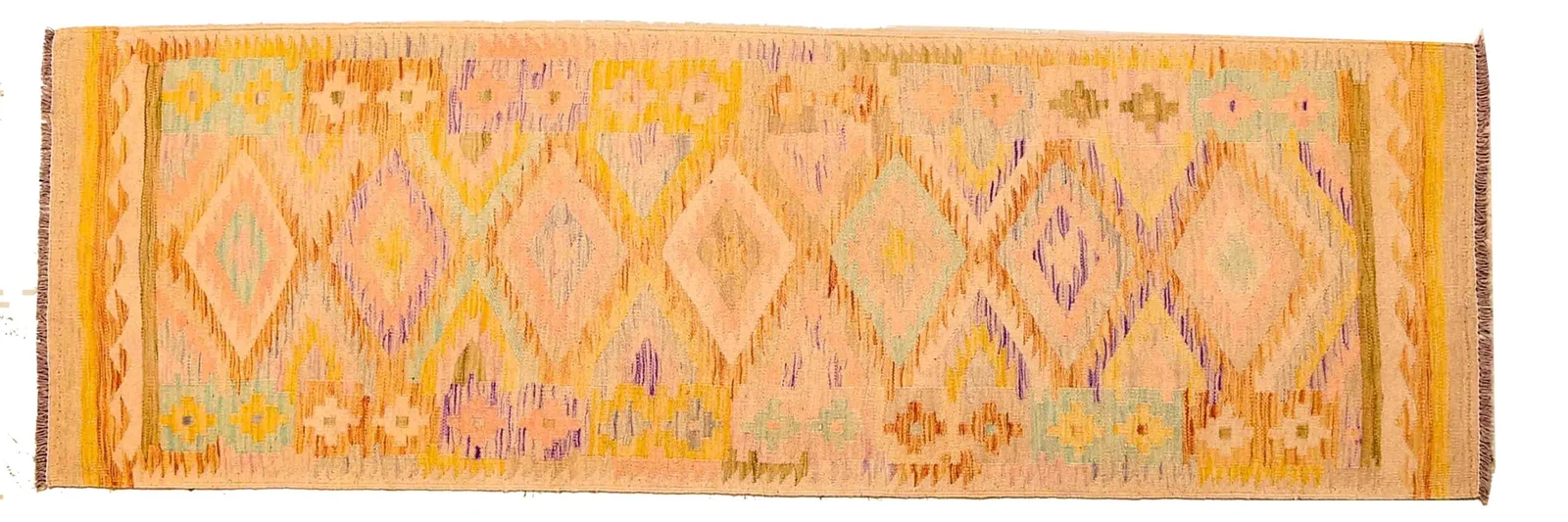
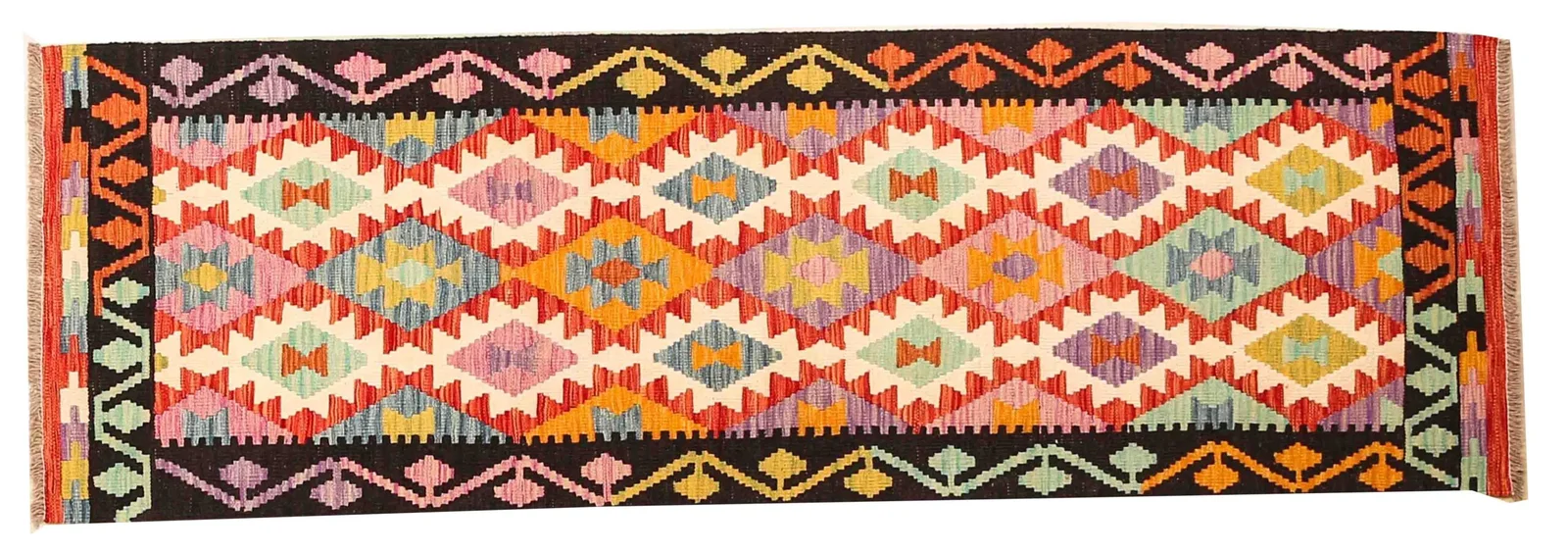
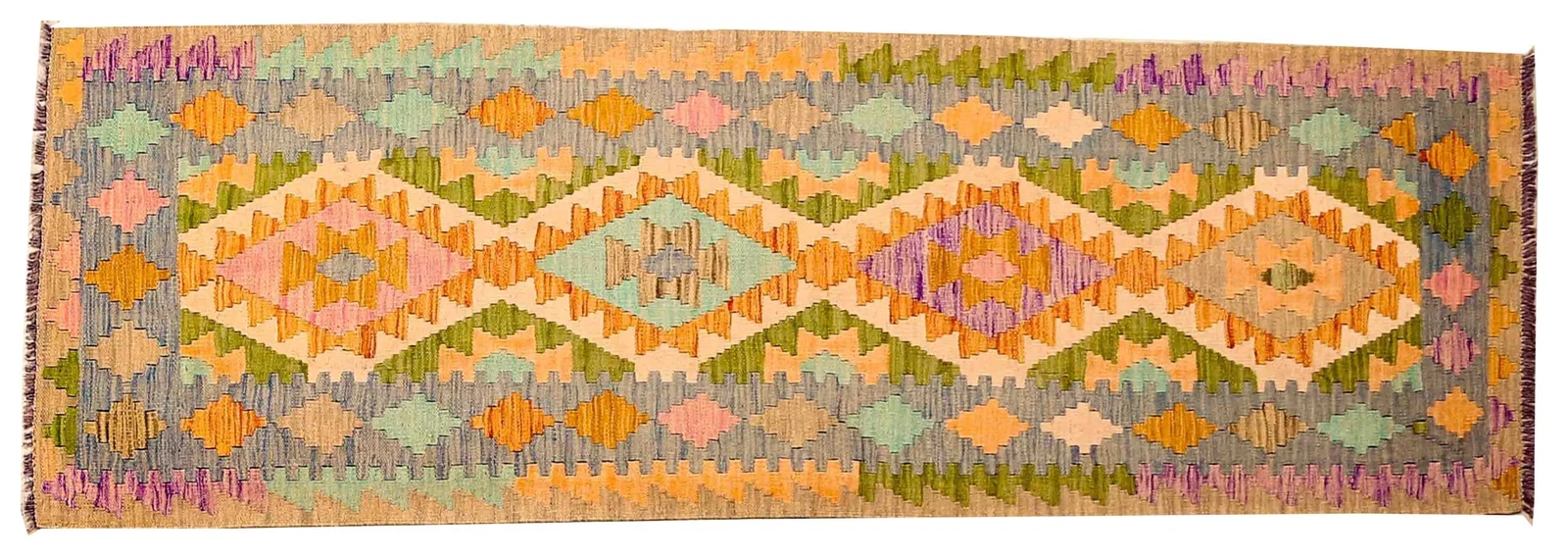
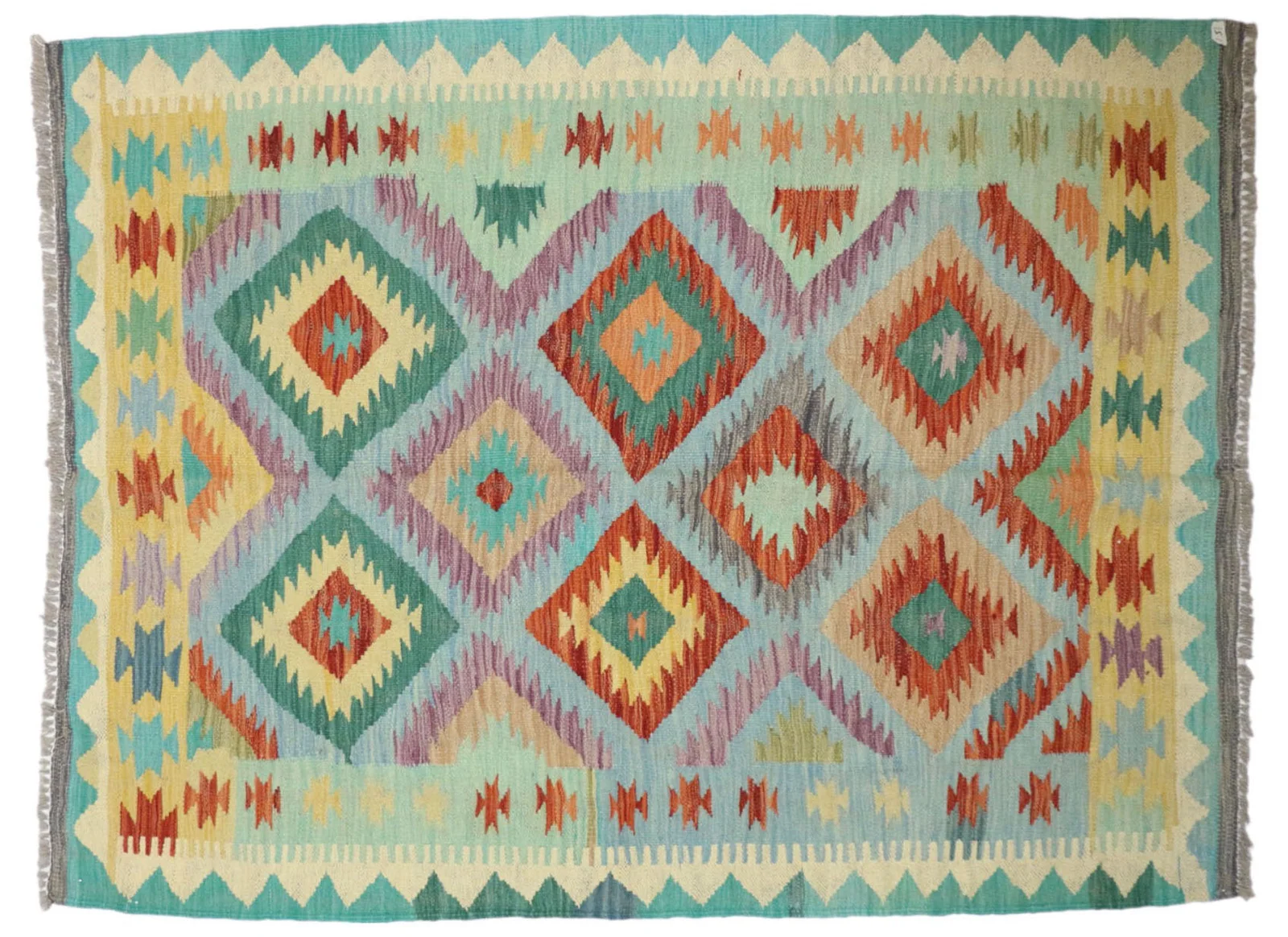
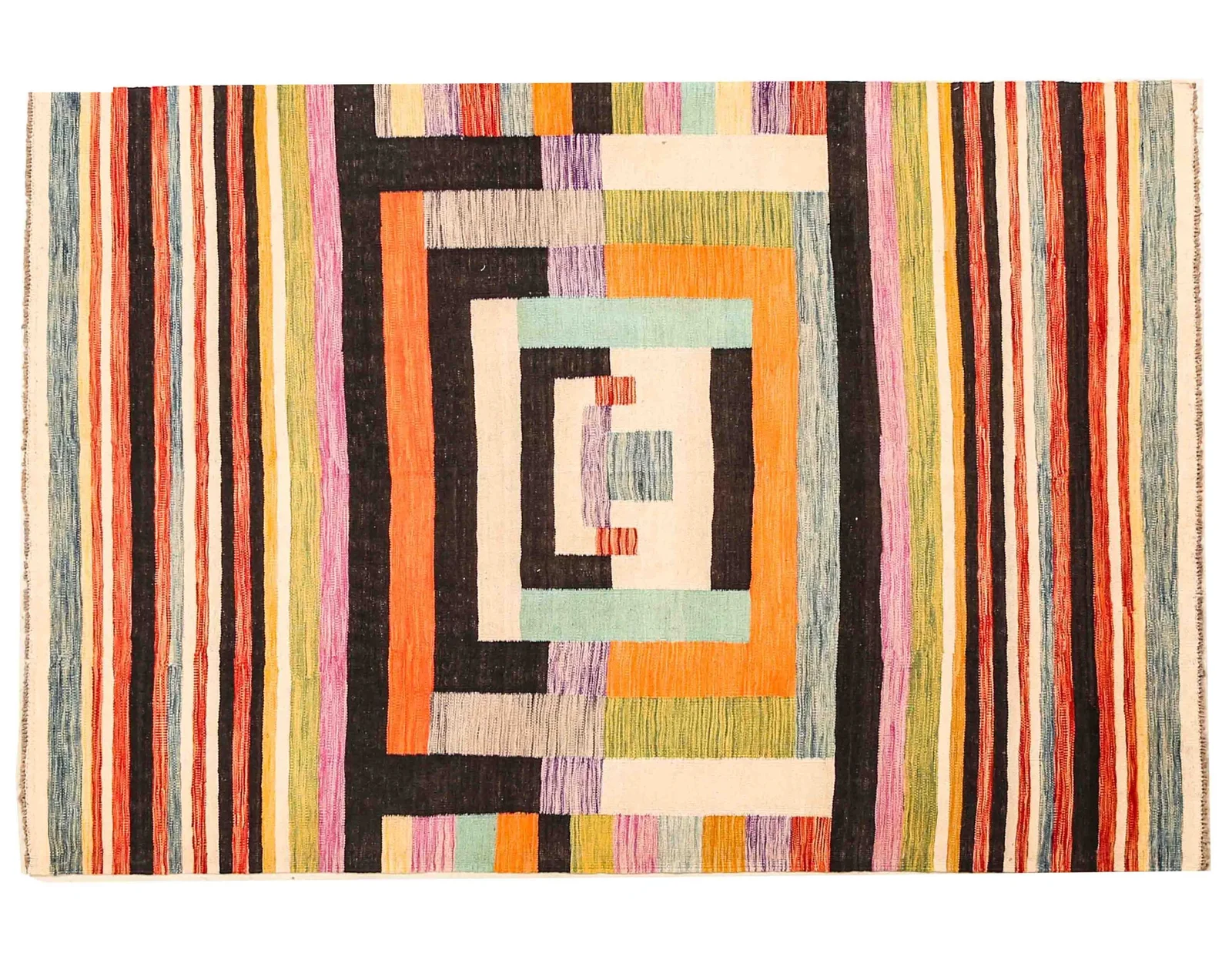
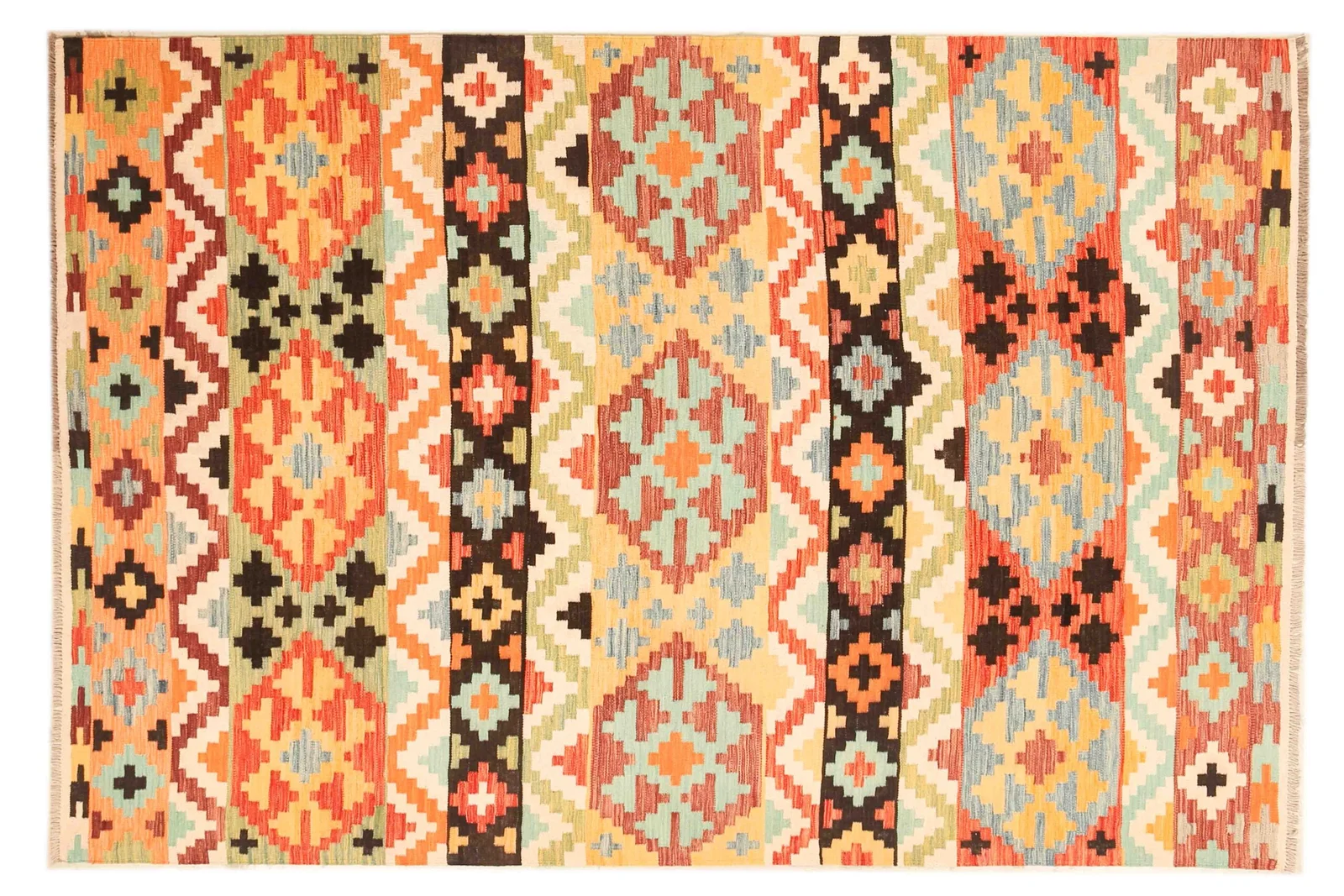
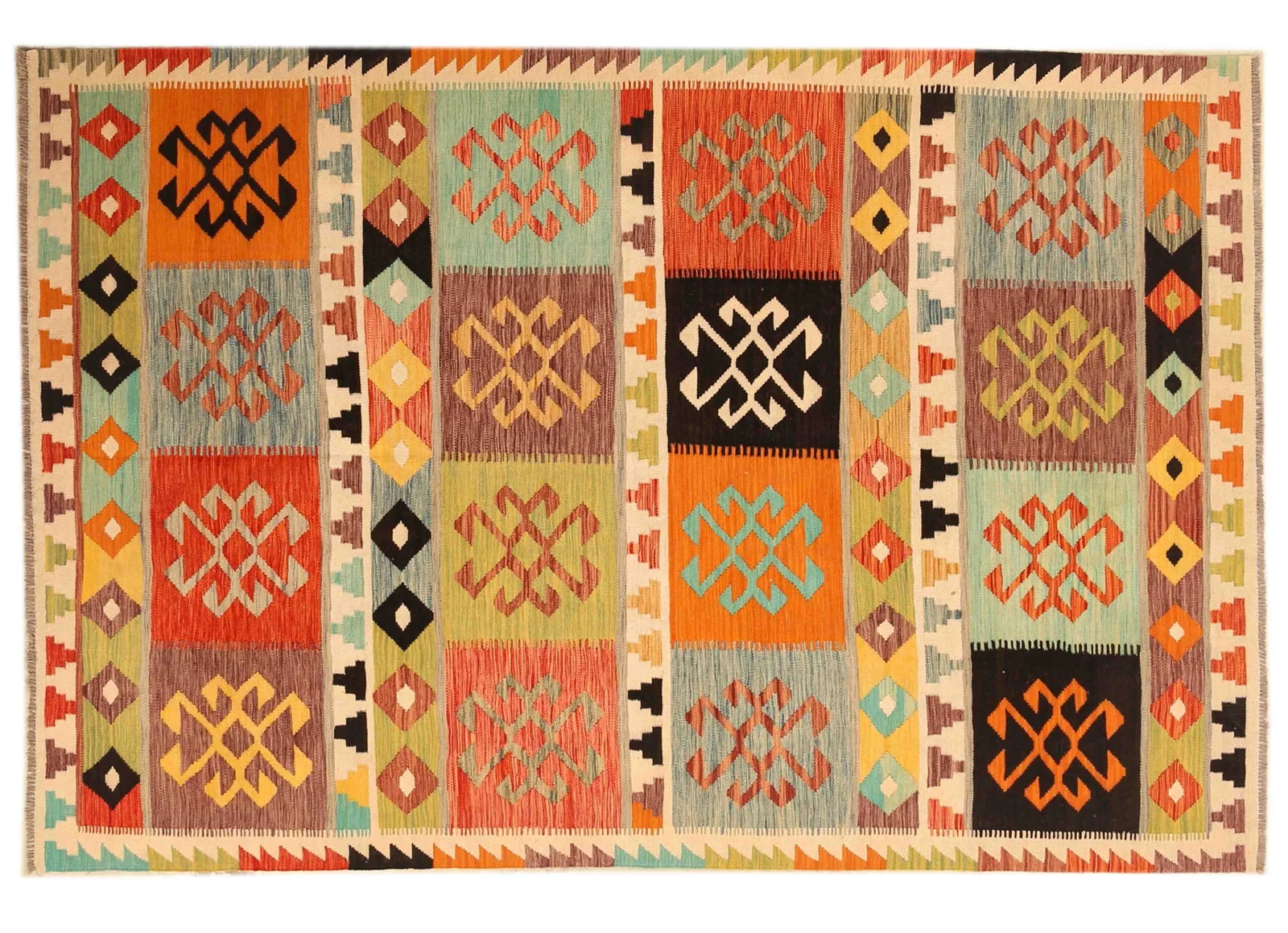
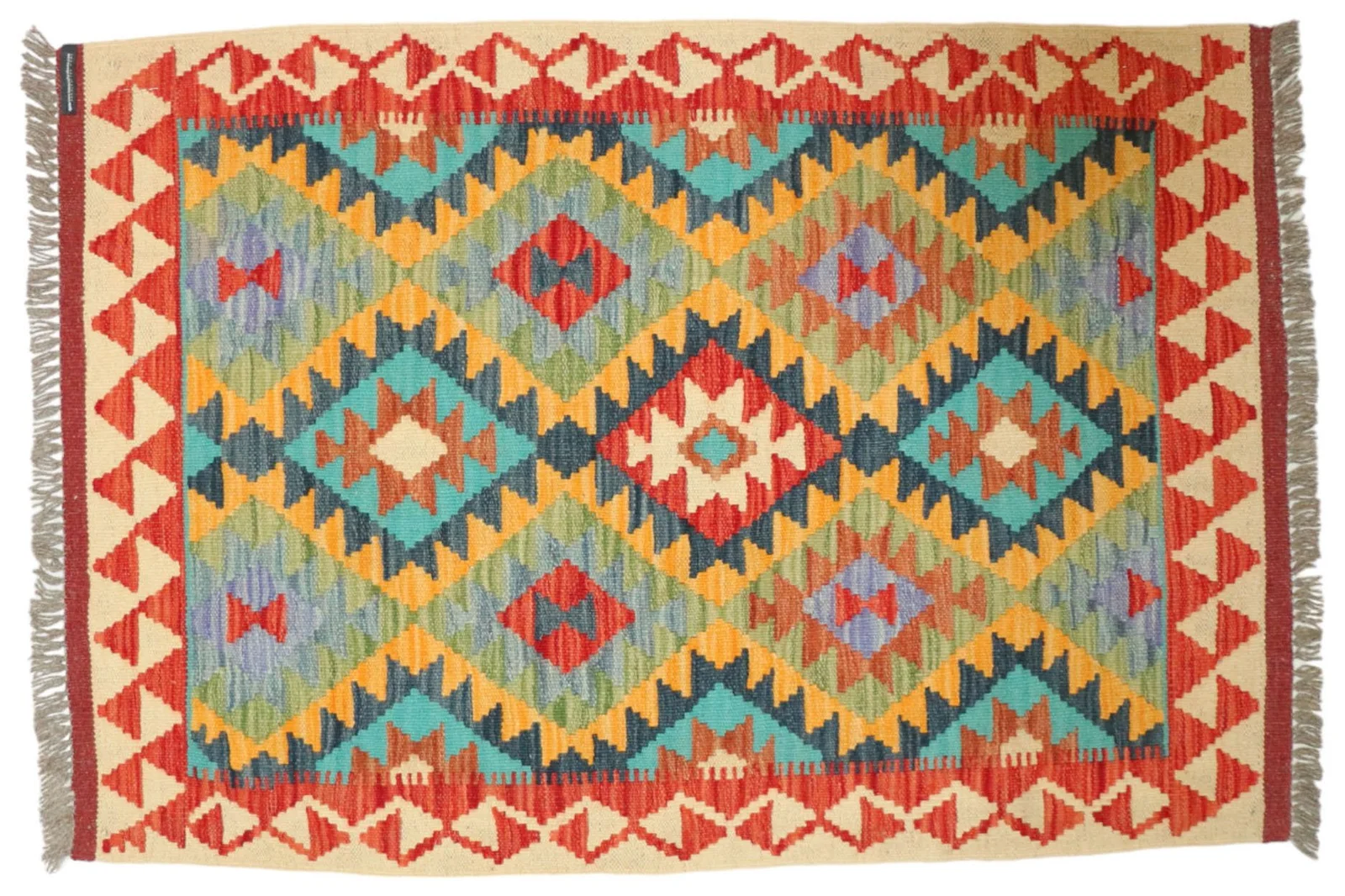
Shop kilim rugs by type
The quickest way to narrow your choice is by shape and size. Runners suit hallways and kitchens. Larger kilims anchor a sofa, a bed or a dining table.
- Kilim Runners: long, narrow rugs for hallways, landings and beside the bed.
- Large Kilim Rugs: room-sized kilims for living rooms, bedrooms and dining areas.
- Afghan Kilim Rugs: bold geometric designs in deep, saturated colour.
- Modern Kilim Rugs: simpler blocks and stripes for contemporary rooms.
- Small Kilim Rugs: for reading corners, bedsides and doorways.
What is a kilim rug?
A kilim rug is a flat-woven rug made without knots or pile. The weaver passes coloured wool threads (the weft) over and under a set of tightly stretched threads (the warp), then packs each row down hard. The pattern is built into the weave itself rather than printed or tufted on top, which is why a good kilim looks crisp on both sides.
The word comes from Turkish, and you will also see it spelled “kelim” or “gelim”. Kilims have been woven for centuries across a wide belt of countries, from Turkey and the Caucasus through Iran to Afghanistan. They have been used as floor coverings, wall hangings, bags and blankets.
How a kilim is woven
Most kilims use a slit-tapestry weave. Where two colours meet, the weaver turns each thread back on itself instead of linking it to its neighbour, which leaves a tiny vertical slit. Those slits are why kilim patterns favour diagonals, diamonds and steps over long straight vertical lines. The result is a weft-faced rug: the wool covers the warp completely, giving a dense, smooth surface that is usually close to identical on the reverse.
Because there is no pile, a kilim is far thinner and lighter than a knotted rug of the same size. That makes it easy to roll, carry, shake out and move between rooms.
Kilim rug size guide
Measure the space first, then choose a kilim that frames the furniture rather than floating in the middle of the floor. A rug that is too small is the most common buying mistake.
| Room | What the rug should do | Size (cm) | Size (ft) |
| Hallway | Leave 10–15 cm of floor visible on each side | 60–80 × 200–300 | 2’–2’7″ × 6’7″–9’10” |
| Small living room | Sit under the front legs of the sofa | 120 × 180 to 160 × 230 | 4′ × 6′ to 5’3″ × 7’7″ |
| Large living room | Sit under the front legs of every seat | 200 × 300 or larger | 6’7″ × 9’10″+ |
| Double bed | Cover the lower two-thirds of the bed and extend 50 cm each side | 160 × 230 | 5’3″ × 7’7″ |
| King bed | Same rule, wider bed | 200 × 300 | 6’7″ × 9’10” |
| Dining table | Table size plus 60 cm on every side | 200 × 300 for 6 seats | 6’7″ × 9’10” |
| Reading corner or bedside | Define a small zone | 60 × 90 to 100 × 150 | 2′ × 3′ to 3’3″ × 4’11” |
Kilim runners for hallways
A kilim runner is the hardest-working rug in the house. Its flat weave sits low, so doors open over it and it won’t trip anyone on the stairs or landing. Choose a runner about 20–30 cm narrower than the hallway and long enough to reach from the front door to the first turn. Each runner listing shows its exact width and length.
Choosing a kilim for each room
Living rooms
Go larger than you think. A kilim that sits under the front legs of the sofa and chairs joins the seating into one area. Busy patterns hide crumbs and footprints well.
Bedrooms
A kilim at the foot of the bed or along one side is the first thing your feet touch in the morning. Softer, faded palettes keep the room calm.
Hallways and kitchens
These are high-traffic areas, which suits a dense, tightly packed wool kilim. Pick a darker or more patterned rug, and use an underlay so it stays put on hard floors.
Dining rooms
Flat-weave is the practical choice under a table because chair legs slide over it instead of catching in pile. Size up so the chairs never drop off the edge.
What kilim motifs mean
Kilim patterns were never just decoration. Many motifs carry traditional meanings, although these vary between regions and weavers, and many modern kilims use them purely for their look.
Kilim vs dhurrie vs shatranji
All three are flat-woven rugs, but they come from different places and use different fibres.
| Rug | Main origin | Usual fibre | Typical look |
| Kilim | Turkey, the Caucasus, Iran, Afghanistan | Wool | Bold geometry, saturated colour |
| Dhurrie | India | Cotton, sometimes wool or jute | Lighter, softer colours and stripes |
| Shatranji | Rangpur, Bangladesh | Cotton, jute or chenille blends | Geometric, reversible, washable |
How to care for a kilim rug
- Vacuum gently. Use suction only, or turn off the rotating brush. A beater bar pulls at the fringe and weft.
- Shake small kilims outdoors every few weeks.
- Turn it over. Most kilims are reversible, so flipping one every six months spreads the wear.
- Rotate it if one end sits in sunlight, so the colours mellow evenly.
- Blot spills straight away with a clean white cloth and cold water. Never rub.
- Don’t machine wash. For a deep clean, use a specialist rug cleaner every few years.
- Never pull a loose thread. Snip it level with scissors.
- Use an underlay on hard floors to stop slipping and reduce wear.
Why buy your kilim rug from Lamoi
- Hand-woven, one of a kind. The rug in the photo is the rug you receive.
- Exact sizes listed. Every kilim shows its measurements in centimetres.
- A UK business. Lamoi is based in Woodbridge, Suffolk.
- Questions before you buy? Message us on WhatsApp and we’ll help you choose.
Kilim rug FAQs
What is the difference between a kilim and a normal rug?
A kilim is flat-woven, so it has no pile and no knots. The pattern is woven straight into the rug, which makes a kilim thinner, lighter and usually reversible. Most other rugs are knotted or tufted with a raised pile.
Are your kilim rugs handmade?
Yes. Every kilim in our collection is woven by hand on a loom, one row at a time. Small variations in line and colour are normal and show the rug is hand-made.
Do kilim rugs need an underlay?
Yes, on hard floors. A kilim is thin and light, so an anti-slip underlay stops it sliding, keeps the corners flat and reduces wear. On carpet, an underlay designed for rug-on-carpet use stops it creeping.
Are kilim rugs reversible?
Most are. Because the wool covers the warp on both faces, the reverse looks almost the same as the front. Turning a kilim over every six months spreads the wear and doubles its life.
Can I put a kilim rug in a hallway or other busy area?
Yes. A tightly woven wool kilim is hard-wearing, and its low profile lets doors open over it. Choose a darker or busier pattern for heavy traffic and use an underlay on hard floors.
What size kilim rug do I need for my living room?
Choose a kilim large enough to sit under the front legs of your sofa and chairs. For most living rooms that means 160 x 230 cm or 200 x 300 cm. Measure the seating area first and go larger rather than smaller.
How do I clean a kilim rug?
Vacuum with suction only or with the rotating brush turned off, and shake small kilims outdoors. Blot spills straight away with a white cloth and cold water. Do not machine wash a kilim. Use a specialist rug cleaner for a deep clean every few years.
Will the colours of a kilim rug fade?
Strong direct sunlight will slowly soften any natural fibre over years. Rotating the rug and turning it over helps the colours mellow evenly rather than fading in one patch.
Do you sell kilim runners?
Yes. Our kilim runners are long, narrow rugs made for hallways, landings, kitchens and the side of a bed. Each listing shows the exact width and length in centimetres.
What is the difference between a kilim and a dhurrie?
Both are flat-woven. A kilim is usually wool and comes from Turkey, the Caucasus, Iran or Afghanistan, with bold geometric patterns. A dhurrie is usually cotton, comes from India and tends to use softer colours and stripes.
Find your kilim rug
A hand-woven kilim is made once. When it sells, that exact design is gone. Browse our kilim rugs, check the size against your room, and bring home a rug that no one else has.