Handwoven African Tote Bags UK — Woven from Milulu Grass
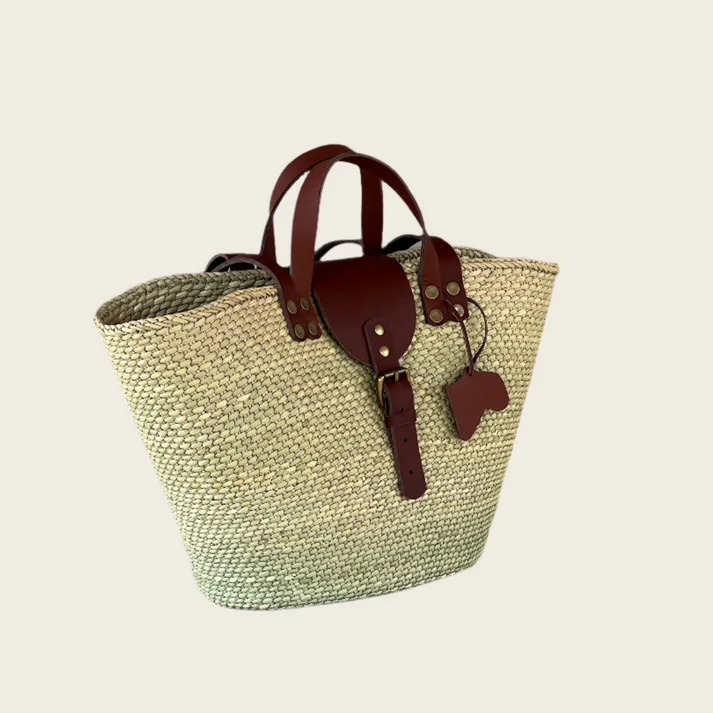
Every one of our handwoven African tote bags starts as a reed. Milulu grows wild along the streams of Tanzania’s southern highlands, and our artisan partners in Iringa harvest it by hand, dry it in the sun, and colour it using extracts drawn from roots and leaves. Each bag is then woven by hand and finished with handles cut from Tanzanian cow leather.
What you get is a bag that weighs almost nothing, holds its shape when it’s full, and softens as you use it. Roomy enough for a weekly shop, smart enough to take to the office, and equally at home at the beach or a Saturday market.
Three sizes, eight colourways in stock and four more made to order, from £35, delivered anywhere in the UK in 3–7 working days.
Why Choose a Milulu Grass Tote Bag?
Most tote bags are made. This one is grown. Milulu is a wetland reed — it isn’t farmed, irrigated or treated. It grows on its own along streams in the Iringa and Njombe regions of Tanzania, and the women who weave it pull it up by hand, clean it, and lay it out to dry in the sun before a single strand is woven.
It’s genuinely light. Pick one up empty and you’ll barely notice it. That matters more than people expect — a heavy bag is a heavy bag before you’ve put anything in it.
It’s stronger than it looks. The reed stays flexible rather than brittle, so under a full load the weave gives slightly and springs back instead of splitting. It’s the same property that makes it work as a laundry hamper.
It breathes. The open weave means wet swimwear, fresh bread or vegetables from the market won’t sit in trapped moisture.
It changes. Milulu starts out faintly green and settles into a warm, natural straw tone over the first month or two. That’s the reed doing what it does, not the bag wearing out.
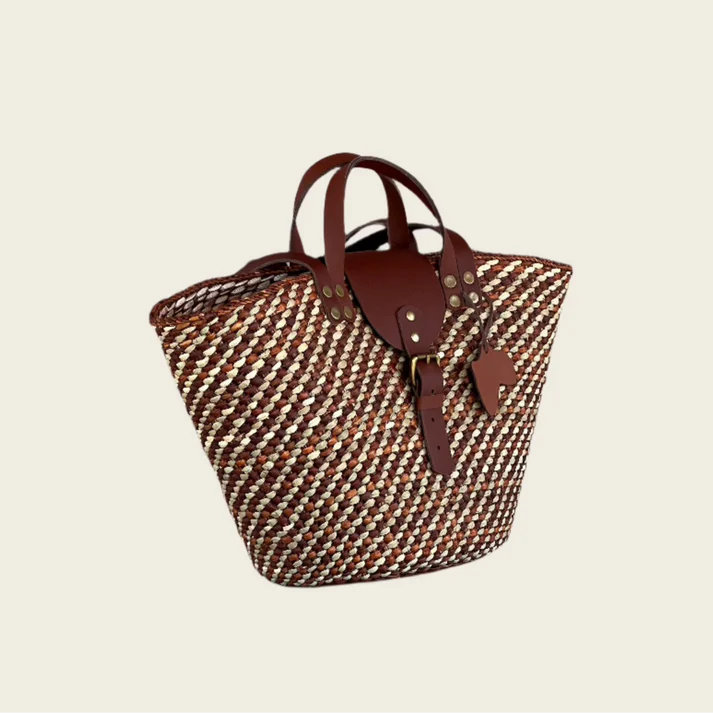
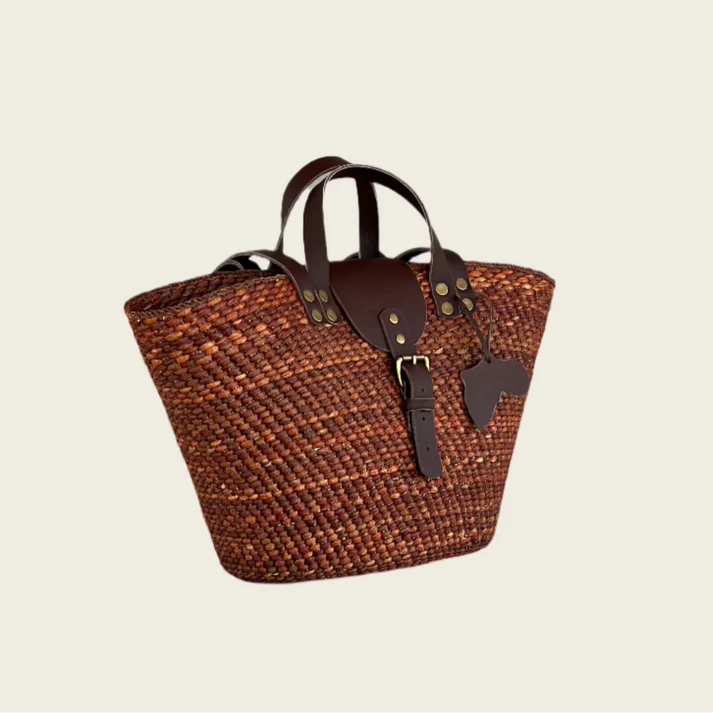
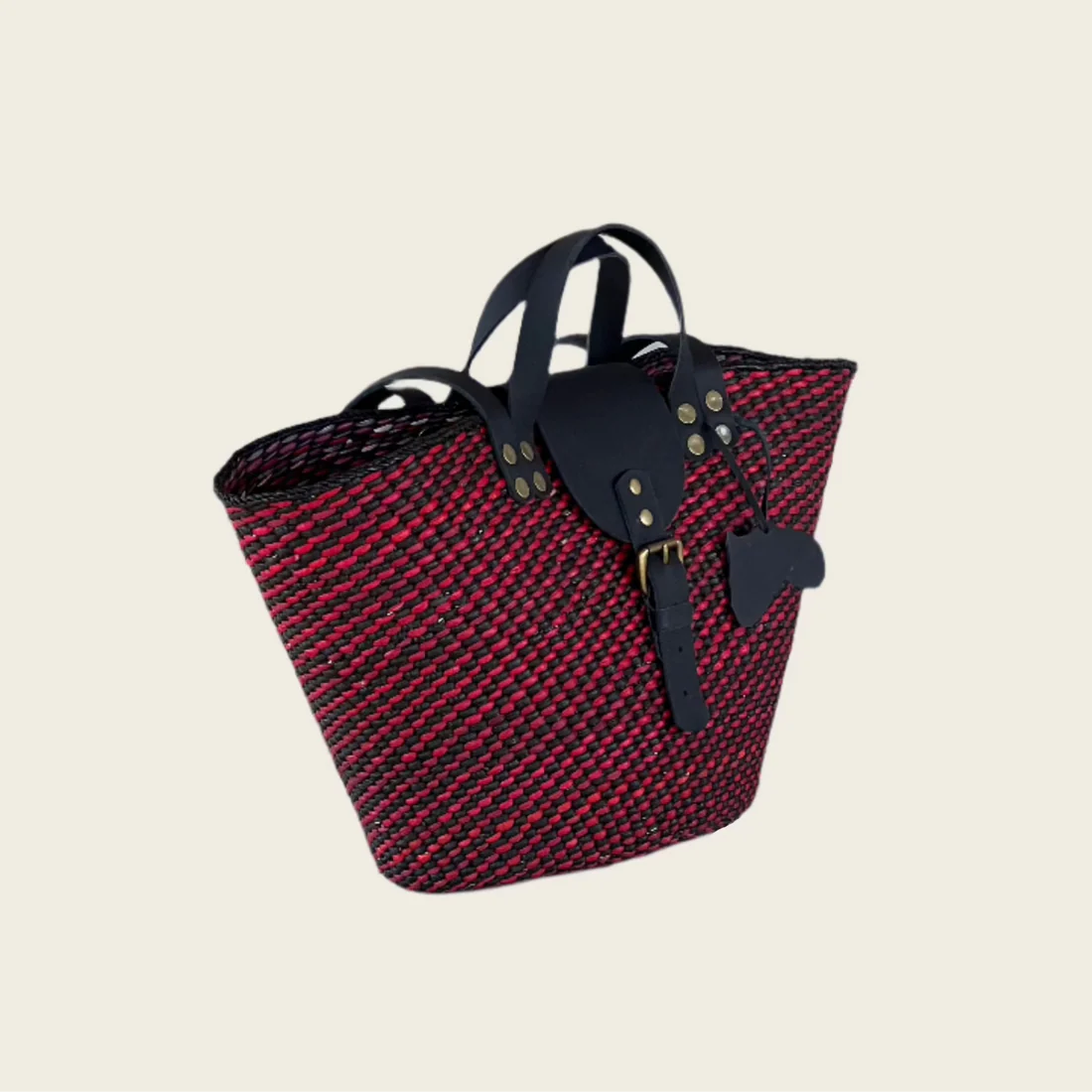
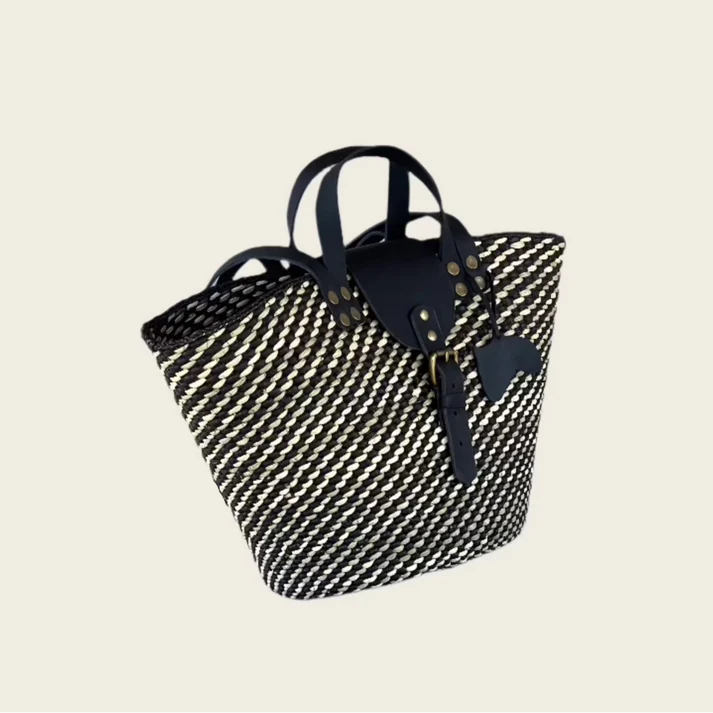
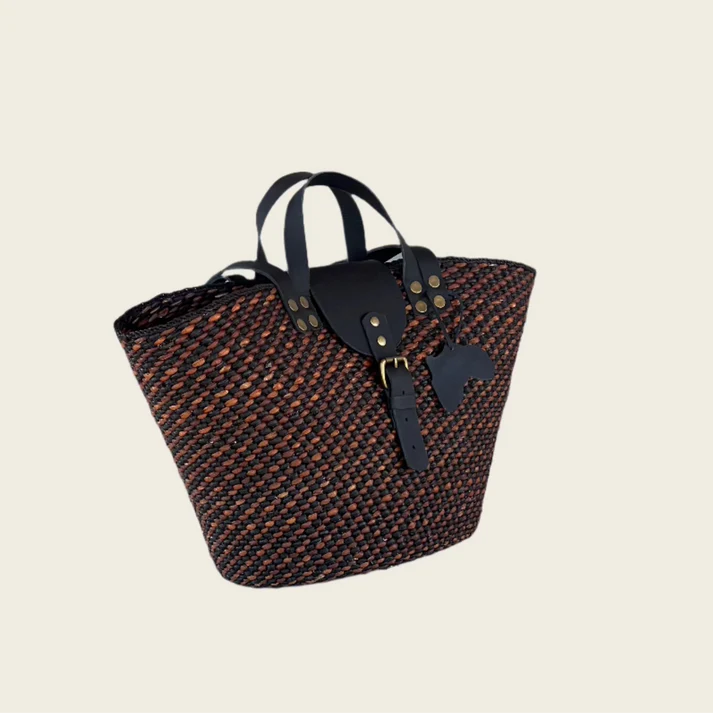
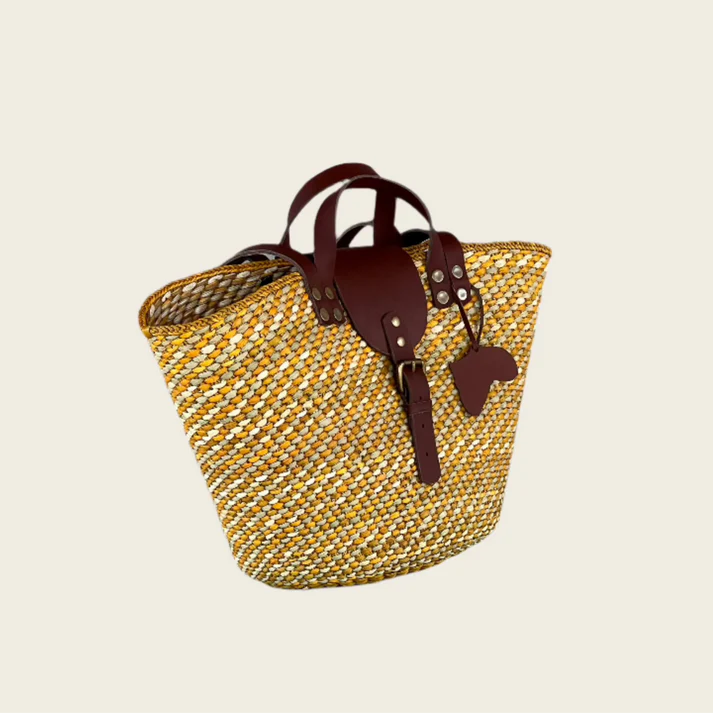
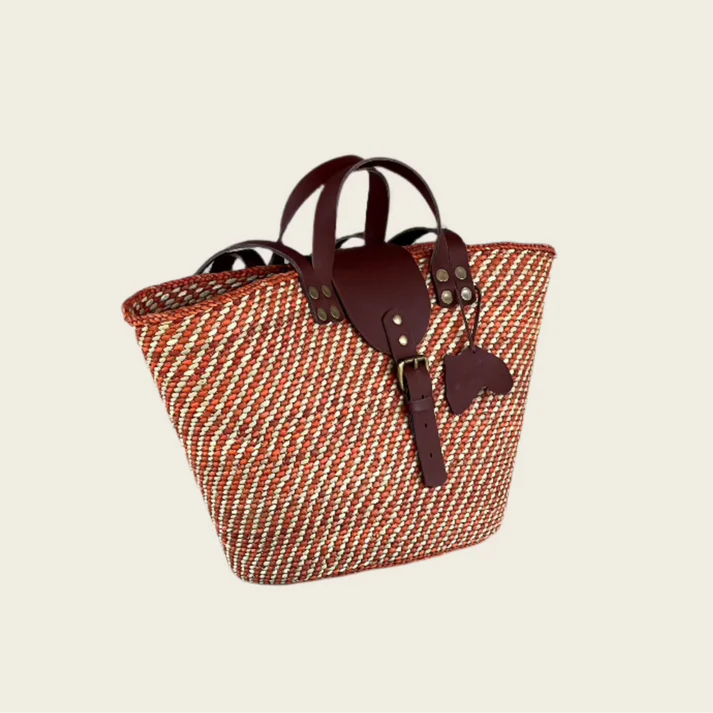
No two are the same. Hand-weaving means the pattern, the tension and the tone shift slightly from bag to bag. Yours will not be identical to the photograph — it will be close, and it will be only yours.
And it supports the people who made it. Every bag is woven by a rural woman artisan earning a fair, steady income from the craft her community has practised for generations.
African Tote Bag, Basket Bag or Market Basket — What’s the Difference?
you’ll see bags like ours sold under several different names, and it’s worth knowing what they mean before you buy, because the words describe where a bag was made rather than how good it is.
An African basket bag is the term most UK shops use for any handwoven bag with a structured base and an open top — which is exactly what these are. A market basket or woven shopping bag usually means the larger sizes, bought mainly for the weekly shop or a farmers’ market. A kiondo is specifically a Kenyan sisal bag, softer in construction than ours. A Bolga basket bag comes from Bolgatanga in Ghana and is woven from a coarser elephant grass.
Ours are Tanzanian. Woven in Iringa from Milulu reed, structured enough to stand up on their own when full, and finished with leather handles rather than woven ones. So if you’ve been searching for an African woven bag, a handmade basket bag or a natural fibre tote and landing on the same handful of Kenyan and Ghanaian shops, this is the one you haven’t seen yet.
Whatever you call it, it does the same job: a light, roomy, handmade bag that looks better the more you use it.
What Makes the BEBA Tote Bag Different?
Handwoven in Iringa, Tanzania. Not “African-inspired,” not designed here and made elsewhere. Woven in the region the reed grows in, by the people who have always woven it.
100% dried Milulu reed. No synthetic blend, no plastic core, no machine-woven base with a natural finish over the top.
Tanzanian cow leather handles. Real leather, hand-attached, not glued strapping. They soften with use and take on the shape of your shoulder.
Coloured with natural extracts. The blacks, browns, rusts and yellows come from roots and leaves — which is why they read as warm and slightly uneven rather than flat and printed.
Three sizes and twelve colourways. Natural, brown, black, red, rust, yellow, plus pink, purple, green and striped or patterned weaves. Real choice, not one bag in one shade.
Retail and wholesale. Buy one for yourself, or order in quantity for a shop, a stall or a styling client. We’re flexible on numbers.
Tote Bag Size Guide
Milulu totes flare outwards as they rise, so the opening is considerably wider than the base. That’s what gives them their shape when full, and it means each size holds more than the base measurement suggests.
Small stands 20 cm tall, with a 19 cm base widening to 31 cm across the top. It comfortably takes a purse, phone, paperback, water bottle and sunglasses — an everyday shoulder bag rather than a carryall.
Medium stands 27 cm tall, with a 28 cm base widening to 45 cm across the top. It holds a 13″ laptop, a notebook, your lunch and a folded cardigan with room to spare. This is the size that works for both the commute and the supermarket, and it’s the one most people are happiest with.
Large stands 32 cm tall, with a 28 cm base widening to 51 cm across the top. It swallows a full weekly shop, a 15″ laptop, or a beach towel and everything that goes with it. If you’re after a large woven tote bag for shopping or the beach, this is the one.
Not sure which to pick? Go Medium if you want one bag that does everything. Go Large if you’re buying it mainly for shopping or the beach. Go Small if you want something to carry on your shoulder day to day rather than a bag you fill.
Milulu vs Canvas, Leather, Bolga and Sisal
Handwoven African bags aren’t all the same, and a Milulu tote isn’t the right bag for every situation. Here’s an honest comparison against the alternatives you’re probably weighing up.
Milulu (ours) is woven in Iringa, Tanzania. It’s the lightest of the natural options, holds its shape reliably when full, and the open weave breathes well. Every bag is unique because every bag is woven by hand. It can’t be soaked or washed — a wipe with a damp cloth is the whole cleaning method. Typically £35–£65 in the UK.
Bolga, or elephant grass, comes from Bolgatanga in Ghana. It’s light, structured and breathable much like Milulu, and equally unique bag to bag. It also can’t be washed. Usually £30–£60 in the UK. The main difference is the reed itself — Bolga is coarser and stiffer to the touch, Milulu finer and more pliable.
Sisal kiondo is woven in Kenya from sisal fibre. Light and breathable, and again no two are alike, but it’s a softer construction that tends to slump rather than stand up when the bag is full. It can’t be washed either. Usually £30–£70.
Canvas is factory-made and identical bag to bag. It’s light and only partly breathable, and it won’t hold its shape at all — it collapses when you set it down. What it does have is the one advantage none of the natural options can match: it goes in the washing machine. And at £5–£20 it costs a fraction of the price.
Leather is structured and long-lasting, but it’s heavy before you’ve put anything in it, it doesn’t breathe, and it can’t be washed. Expect £80 and upwards.
So: if you need something you can throw in the machine after a muddy festival, buy canvas — it’s cheaper and it will survive that better. If you want a bag that’s light to carry, breathes properly, holds its shape when it’s full, and was made by hand from a reed that grew wild along a Tanzanian stream, this is the one.
An Ethical, Fair Trade Bag You Can Actually Trace
Plenty of shops sell sustainable tote bags. Fewer can tell you who made theirs.
Ours are woven by women’s cooperatives in the Iringa and Njombe regions of southern Tanzania. They’re paid directly and fairly for their work, on terms agreed with them rather than set for them, and the income is steady rather than seasonal — which for a rural weaving household is the part that actually matters.
The environmental case is simpler than most eco-friendly shopping bags can claim. Milulu is a wild wetland reed. Nothing is planted for it, nothing is irrigated, no land is cleared and no fertiliser is used. It’s cut by hand, dried in the sun, and coloured with extracts from roots and leaves rather than chemical dyes. There is no factory anywhere in the process, and no synthetic fibre in the finished bag.
At the end of a long life it’s a natural fibre bag with a leather handle, which is to say it will break down rather than sit in landfill for a century. A canvas tote is cheaper. A plastic bag-for-life is cheaper still. Neither supports a weaver in Iringa.
Caring for Your Milulu Tote Bag
Looked after properly, a Milulu tote lasts for years. The rules are short:
Wipe it with a damp cloth. That’s the whole cleaning method.
Don’t soak it, machine wash it, spin it or tumble dry it. Milulu doesn’t tolerate immersion.
Don’t scrub the weave. A gentle wipe lifts most marks; scrubbing lifts fibres.
Caught in the rain? No harm done — just let it air-dry naturally, away from radiators and direct heat.
Store it loosely stuffed with a scarf or some tissue so it keeps its shape between uses.
Condition the leather handles occasionally with any standard leather balm.
And one thing that isn’t a fault: the colour will lighten over the first one to two months. The reed starts faintly green and settles into a natural straw tone. Every Milulu bag does this.
Which Colour Should You Choose?
Natural — the purest version of the reed, and the one where the natural lightening shows most clearly. Goes with everything.
Brown & Natural — our most popular. Warm, forgiving of marks, and the safest choice if you’re buying as a gift.
Brown — deeper and more uniform than the two-tone. Reads a little smarter.
Black & Natural — the one to take to work. Enough contrast to look deliberate, quiet enough for an office.
Black & Brown — understated and genuinely unisex.
Black & Red — the statement piece. Buy this one if you want to be asked about it.
Yellow & Natural — summer, holidays, beach days. Cheerful without being loud.
Rust & Natural — earthy terracotta. Best of the range in autumn.
Also available in pink, purple, green, and striped or patterned weaves.
A note on the Deluxe: Deluxe isn’t a colour — it’s our largest bag with the most detailed weave, available across the range. If you’re buying as a gift, it’s the one to choose.
Frequently Asked Questions
What is a Milulu grass bag?
A Milulu grass bag is a handwoven tote made from dried Milulu, a wild wetland reed that grows along streams in the Iringa and Njombe regions of Tanzania. The reed is harvested by hand, sun-dried, coloured with natural root and leaf extracts, and woven into shape. Ours are finished with Tanzanian cow leather handles.
Is a Milulu tote the same as a Bolga or kiondo basket bag?
No. All three are handwoven African basket bags, but they use different materials from different countries. Bolga baskets come from Ghana and use a coarser elephant grass. Kiondo bags come from Kenya and are woven from sisal fibre, which gives a softer bag that slumps when full. Milulu is Tanzanian, finer and more pliable than Bolga, and holds its shape better than sisal.
Why has my bag changed colour?
Milulu starts out faintly green and settles into a warm, natural straw tone over the first one to two months. This is normal for the reed and happens to every Milulu bag. It isn’t a fault or a sign of wear.
Are these bags fair trade?
They’re woven by women’s cooperatives in southern Tanzania who are paid directly and fairly, on terms agreed with them. The reed is wild-harvested rather than farmed, and coloured with natural extracts rather than chemical dyes.
Do you offer wholesale?
Yes. We supply shops, market stalls and stylists at wholesale rates with flexible order quantities. Get in touch to discuss numbers.